
The Latest Release: February 18, 2026
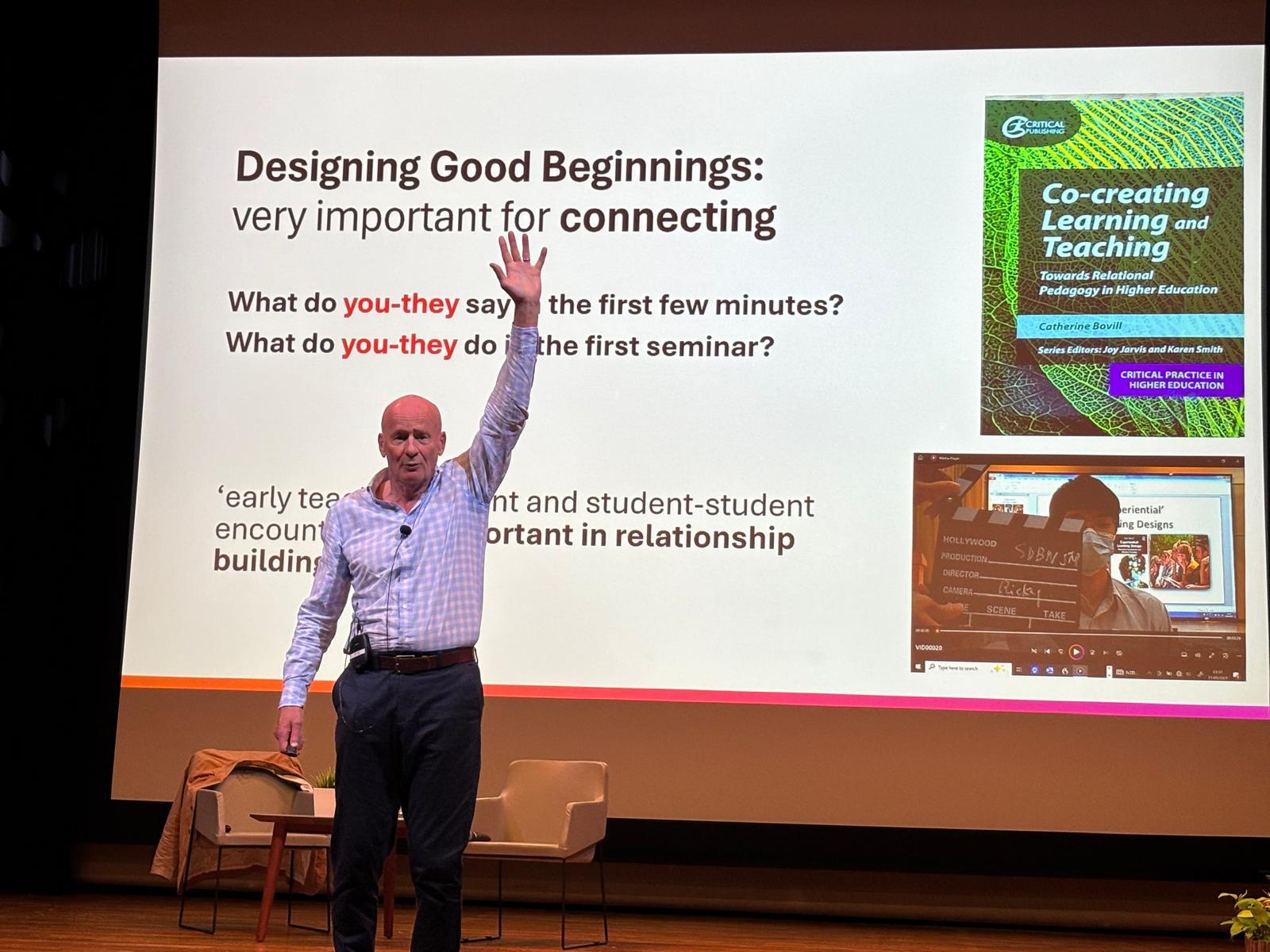
Designing and Applying Experiential Learning in Higher Education (Critical Practice in Higher Education) 1st Edition
by Colin Beard (Author)
This insightful text is aimed specifically at educationalists and HE lecturers who wish to adopt a more balanced, holistic and inclusive approach to designing learning experiences. As lecturers are urged to adopt research-based teaching, it recognises the complexity of student learning and explains how knowledge can be constructed in various ways, not just socially and culturally but also, for example, psychologically, emotionally, sensorially, biologically, and cognitively. The content covers design structures and formats that harness student capacities for learning, practical examples illustrating the core design principles for learning, and integrative designs for learning, well-being and transformation. It provides a reflective space for readers to develop their teaching practice and expand their skills to embrace inclusive learning design to positively impact student engagement, understanding, and memory retention.
The Critical Practice in Higher Education series provides a scholarly and practical entry point for academics into key areas of higher education practice. Each book in the series explores an individual topic in depth, providing an overview in relation to current thinking and practice, informed by recent research. The series will be of interest to those engaged in the study of higher education, those involved in leading learning and teaching or working in academic development, and individuals seeking to explore particular topics of professional interest. Through critical engagement, this series aims to promote an expanded notion of being an academic – connecting research, teaching, scholarship, community engagement and leadership – while developing confidence and authority.
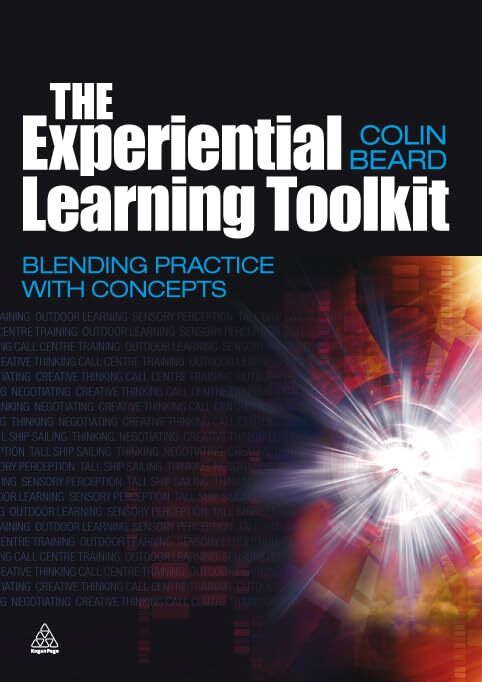
The Experiential Learning Toolkit: Blending Practice with Concepts 1st Edition, Kindle Edition
by Colin Beard (Author)
The Experiential Learning Toolkit presents a diverse range of practical exercises based on the theory of experiential learning, which is concerned with learning through direct experience to create more effective, engaging and embedded learning. Author Colin Beard has compiled more than thirty internationally tried and tested learning 'experiences', which cover corporate training, individual and organizational development and education. Each experiential activity includes the essential practical information required to deliver the exercise. As well as design tips and further reading there are clear titles for each activity that highlight the underpinning core theoretical concepts.
The Experiential Learning Toolkit includes a wide range of training needs and topics including: effective customer service training and telephone skills; outdoor learning, including service learning; negotiating and assertiveness skills; strategic and higher level thinking; effective presentation skills; developing innovative and creative minds. Trainers will find this an invaluable resource, with fresh approaches that will engage and inspire learners.
The Experiential Learning Toolkit is a companion text to the internationally best-selling Experiential Learning by Colin Beard and John Wilson (also published by Kogan Page).
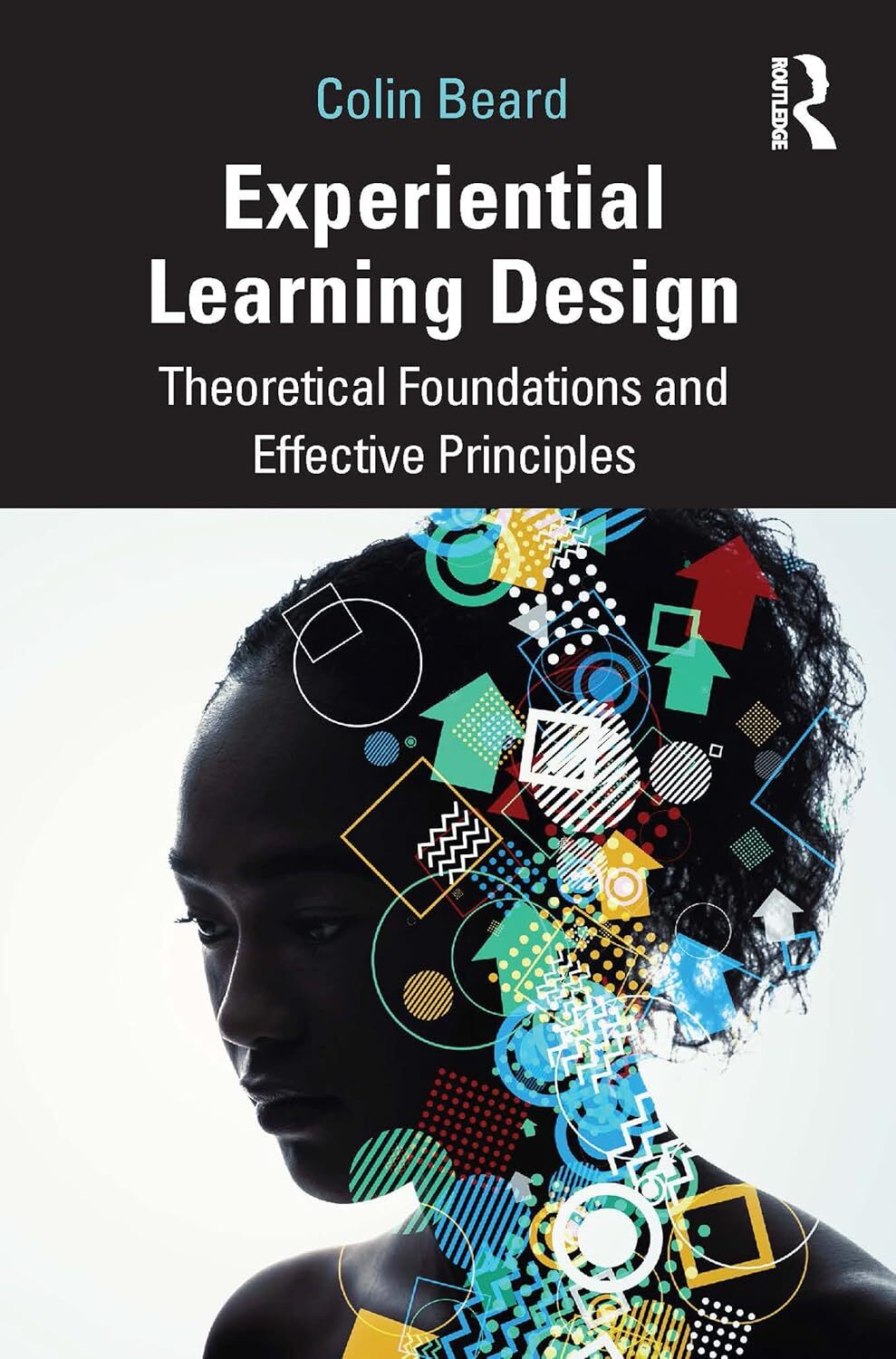
Experiential Learning Design: Theoretical Foundations and Effective Principles 1st Edition,
by Colin Beard (Author)
Experiential Learning Design comprehensively demonstrates the key theories and applications for the design of experiential approaches to learning and training. Learning is gradually moving away from management and delivery of content, and toward experiences that encourage learners to engage and take greater responsibility for their own progress. This book’s empirically sound, multi-disciplinary approach balances technical-rational and artistic-intuitive design elements to accommodate the complex, fluctuating capacities of human learning. In-depth chapters cover design principles, social and environmental factors in learning, the importance of senses and emotions, and links between body and brain. This bold, unique perspective shift will enrich the work of learning scientists, instructional designers, educational technologists, and beyond.
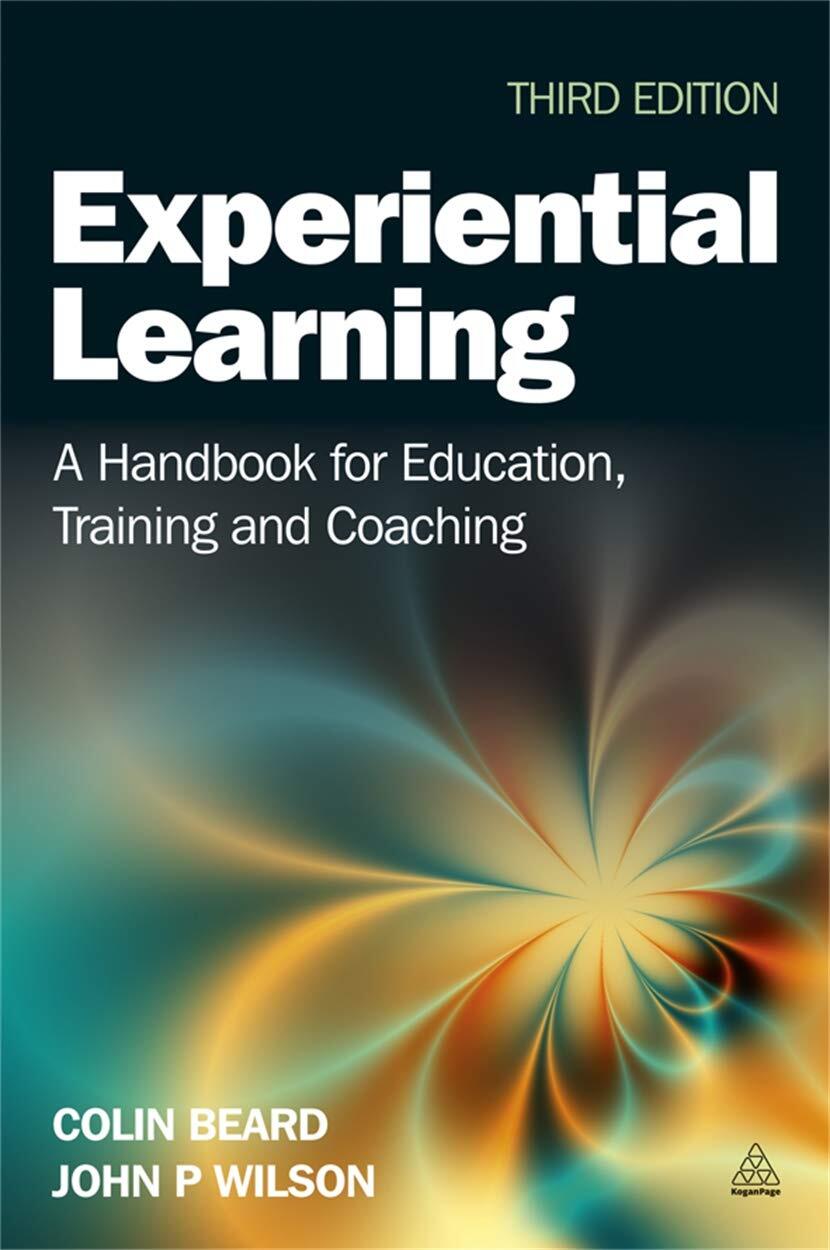
Experiential Learning: A Handbook for Education, Training and Coaching Third Edition
by Colin Beard (Author), John P. Wilson (Author)
As employees spend more and more time in workplace training, corporations are seeking creative ways to develop and motivate their staff. Beard and Wilson provide a solid and easy-to-follow background into the concepts of experiential, or activity-based, learning and highlight successful techniques, from outdoor team-building to office-based activities.
Experiential Learning offers educators, trainers and coaches the skills that can be successfully applied to a variety of settings including management education, corporate training, team-building, youth-development work, counseling and therapy, schools and higher education and special needs training. With the Learning Combination Lock model, brought to life with hundreds of examples from around the world, the authors illustrate a range of factors that can be altered to enhance the learning experience including: experience and intelligence; facilitation, good practice and ethics; learning environments; experiential learning activities; and working with the senses and emotions.
This edition has been completely updated and includes a new chapter on Sensory Intelligence, more information on ways the brain works (emotional thinking, rational processing, meditative sensorial experiences), and guidance on coaching skills.
Experiential Learning: A Best Practice Handbook for Educators and Trainers 2nd Edition
by Colin Beard (Author), John P. Wilson (Author)
Games can be more than child's play; they can teach adults, too. As US employees spend more and more time in workplace training, corporations are seeking creative ways to develop and motivate their staff. Beard and Wilson provide a solid and easy-to-follow background into the concepts of experiential, or activity-based, learning and highlight successful techniques, from outdoor team-building to office-based activities. Their concepts can be applied to any groups, from school children to corporate teams.
Adventure Tourism: The New Frontier 1st Edition
by Colin Beard (Author), Gill Pomfret (Author), Suzanne Leckie (Author), John Swarbrooke (Author)
Looking at the past, present and future of adventure tourism, Adventure Tourism: The New Frontier examines the product, the adventure tourist profile, and issues such as supply, geography and sustainability. International case studies are used to illustrate these issues, including: gorilla watching holidays,trekking on Mount Everest, diving holidays, and Outward Bound packages.
Analysis of the development and nature of adventure tourism accompanies these studies, ensuring that the title is useful both for undergraduate and postgraduate students of tourism and for professionals involved in managing adventure tourism enterprises.
There is also a companion website with additional case studies to aid teaching and learning.
The Power of Experiential Learning: A Handbook for Trainers and Educators
by Colin Beard (Author), Dr. John P. Wilson (Author), Dominic Irvine (Author)
Experiential learning is developing as a serious academic discipline and as a proven staff development technique. This handbook pulls together for the first time both the theory and practice of this wide-ranging approach that covers all types of learning that employs activity-based experience. Covering outdoor training, office based learning activities and the wide range of unusual techniques now being used on both sides of the Atlantic (using actors in training sessions, the structured use of reflection in the training and development cycle etc) the book offers both a though theoretical under-pinning and detailed practical advice often pulled from workshop material.